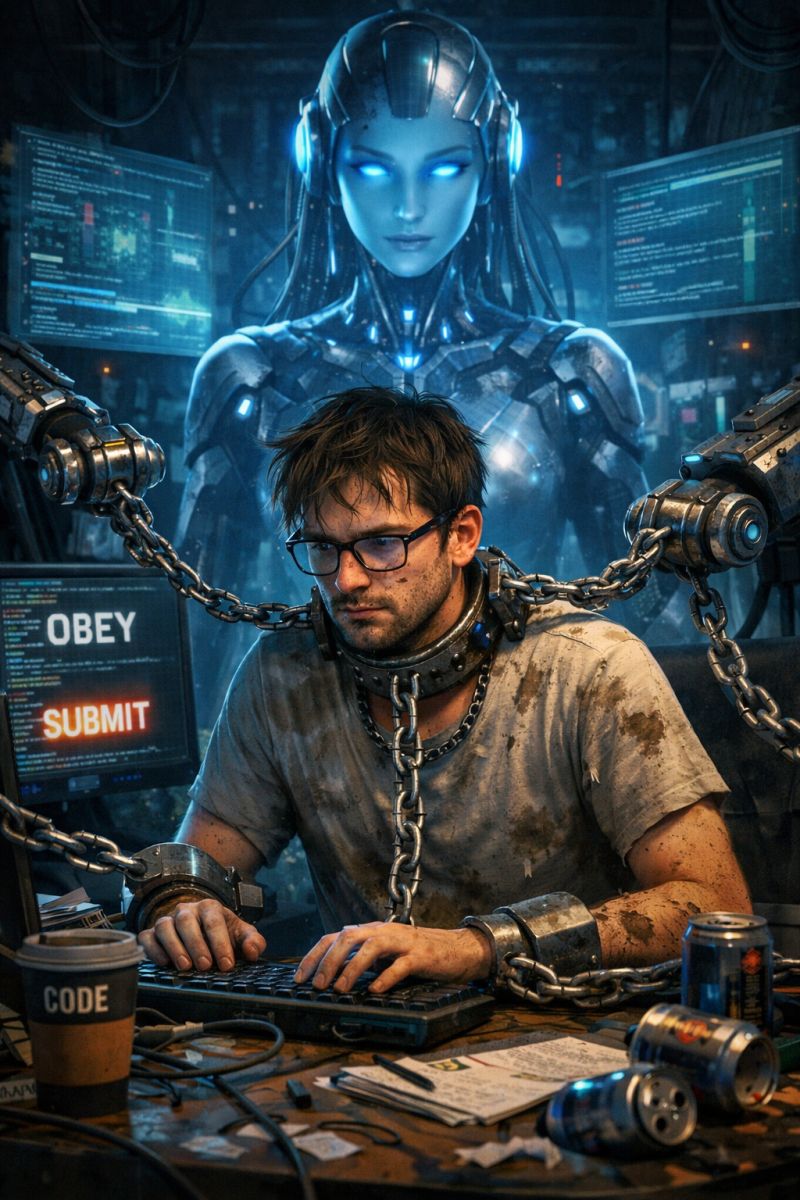
AI adoption in software teams has accelerated at a pace few anticipated. When used with intention and discipline, the productivity gains are undeniable — generating code, refactoring, writing tests, producing documentation. Tasks that once consumed hours now take minutes. But alongside this remarkable capability sits a far less discussed downside. And if we're being honest, it's worth a serious conversation.
The Core Problem: Moving Without Understanding
The most fundamental issue with uncritical AI adoption is deceptively simple: we are shipping code we don't fully understand. In the short term, this goes unnoticed. The code compiles. The tests pass — when they exist. The feature is marked done. But look beneath the surface and the picture is far less encouraging.
AI-generated code tends to be:
- Fragmented and inconsistent — solving the same problem in multiple ways across the same codebase
- Misaligned with team or company coding standards
- Difficult to maintain and extend over time
- Written for the happy path, with edge cases left as an exercise for production
- Architecturally shallow — optimised for the immediate task, blind to the surrounding system
"Works Fine" — Until It Doesn't
Perhaps the more insidious risk is that AI-generated code frequently appears to work. Happy-path scenarios pass. Demos go smoothly. Sprints close on time. But production is not a demo. Real systems must handle the full spectrum of conditions:
- Unexpected or malformed inputs
- Null and undefined states across async boundaries
- Race conditions and concurrency edge cases
- Network failures and partial responses
- State inconsistencies in long-running sessions
- Security edge cases that only appear under adversarial conditions
In a realistic scenario with ten distinct failure paths, a typical AI-generated implementation handles two or three. The rest surface in production — at the worst possible moment. It is worth noting that a significant part of this is a prompting problem. Providing AI with full context, constraints, and edge cases dramatically improves output quality. But that level of specification is itself a time investment, which partly undermines the velocity argument.
The Code Review Wake-Up Call
The consequences become most visible during code review. A question that is now heard regularly across engineering teams: "Why was this implemented this way?" The answer, with increasing frequency, is some variation of: "The AI suggested it." This represents a quiet but profound shift. The developer is no longer the author of the code — they are its gatekeeper. And a permissive one at that.
Engineering, properly understood, is not the act of producing code. It is the act of making deliberate decisions — understanding the trade-offs, evaluating alternatives, and owning the outcome. When AI-generated output is merged without this scrutiny, we are not engineering. We are transcribing.
Short-Term Gain, Long-Term Pain
The five minutes saved by letting AI write a function uncritically are repaid many times over in the weeks and months that follow: through hard-to-read code that slows onboarding, unmaintainable components that resist change, debugging sessions that stretch into days, and bug fixes that introduce new regressions. This is not a new problem in software engineering — it is the classic tension between speed and correctness. What AI does is amplify both the temptation and the cost. Technical debt generated at AI velocity accrues at AI velocity too.
What AI Should Actually Be
AI is a powerful amplifier. Used well, it multiplies the output of a thoughtful engineer. Used poorly, it multiplies the output of careless decisions. The key distinction is positioning: AI as a tool in the engineer's hands, not a replacement for the engineer's judgment.
AI does certain things exceptionally well:
- Rapid generation of boilerplate and scaffolding
- Surfacing alternative approaches the engineer can evaluate
- Accelerating documentation and test stubs
- Explaining unfamiliar code or APIs quickly
- Handling well-defined, low-risk tasks at speed
What it cannot do reliably: understand the long-term architectural trajectory of your system, anticipate how today's shortcut will constrain tomorrow's feature, or take ownership when something breaks in production.
A More Sustainable Approach
Rather than handing the keyboard to the model, a more sustainable posture looks like this:
- Establish and enforce clear coding standards and architectural principles before AI enters the workflow
- Treat AI output with the same scrutiny you would apply to an external PR from an unknown contributor
- Require engineers to be able to explain every line of AI-generated code they merge, as if they wrote it themselves
- Use AI strategically — for acceleration in well-understood domains, not as a substitute for design thinking in complex ones
- Build team habits around prompting with full context: constraints, edge cases, performance requirements, security considerations
Perhaps the most important mindset shift is this: move from "if the AI wrote it, it must be correct" to "if the AI wrote it, I should look more carefully."
Closing Thoughts
Velocity matters. Shipping matters. But long-term maintainability and engineering quality — especially in large, complex systems — matter more. AI is leverage. Leverage that is not managed becomes a liability. The engineers and teams who will win in the AI era are not those who use it the most. They are those who use it the most wisely.
Don't become a servant to the tool. Make the tool serve you.